Friendly Fraud: What It Is & How Sellers Can Fight Back
Your customer got the package. USPS confirms it. But now their bank says you owe them a refund — plus a fee. Here's how to fight back and win.
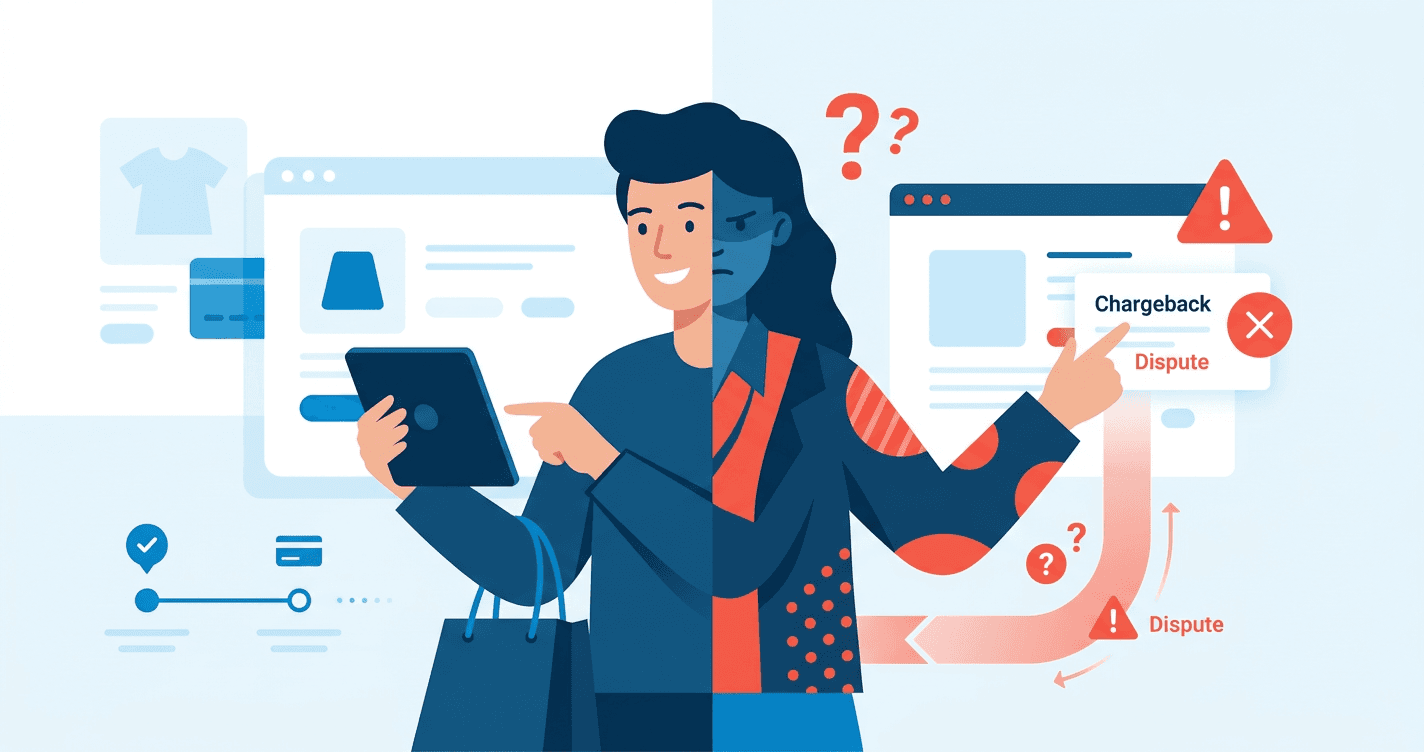
Here's a scenario you probably know too well. You ship an order. The tracking shows “Delivered.” Two weeks later, your payment processor notifies you of a chargeback: the customer claims they never received the item. Their bank sides with them — temporarily, at least — and pulls the money from your account. You lose the product, you lose the revenue, and on top of it all, you get hit with a chargeback fee that can range anywhere from $20 to $100.
If this has happened to you, take a breath. You're not going crazy, and this is not your fault. What you've just experienced has a name: friendly fraud. And it accounts for a staggering 71% of all ecommerce chargeback losses.
The system was designed to protect consumers from genuine theft and merchant error. But over the years, that same system has become a weapon that can be turned against honest sellers — often by the very customers they went out of their way to serve. The good news? You don't have to just accept it. With the right evidence and the right strategy, you can represent the transaction, prove the chargeback is meritless, and recover your money.
This guide will show you exactly how.
TL;DR — What You Need to Know
- Friendly fraud is when a customer files a chargeback despite having received and kept their purchase. It can be intentional, accidental, or opportunistic.
- It's fundamentally different from true fraud (stolen card) and merchant error (you actually made a mistake). Your response strategy depends on knowing which one you're dealing with.
- To fight it, you need specific evidence matched to the customer's claim — tracking data for “not received,” AVS/CVV results for “unauthorized,” product documentation for “not as described.”
- 40% of customers who commit friendly fraud will do it again within 60 days. Not fighting back invites repeat abuse.
- Prevention helps, but when it happens, representment is your right. Use it.
What Is Friendly Fraud?
Friendly fraud occurs when a customer files a chargeback with their bank for a transaction that was, in fact, legitimate. The purchase was authorized by the cardholder (or someone in their household), the product or service was delivered, and there is no genuine grounds for a dispute. Yet the customer contacts their issuing bank, claims something went wrong, and the bank initiates a chargeback against you.
The term “friendly” is misleading — there's nothing friendly about losing your merchandise, your revenue, and paying a penalty fee on top of it. The name simply distinguishes it from true fraud, where a criminal uses stolen card information. In friendly fraud, the actual cardholder (or someone with access to the card) made the purchase. That's what makes it so frustrating and so difficult for banks to catch automatically.
Not every case of friendly fraud looks the same. It tends to fall into three categories:
1. Intentional Friendly Fraud
This is the most infuriating type. The customer buys a product, receives it, and then deliberately files a chargeback to get their money back while keeping the item. They might claim the package never arrived, or that the transaction was unauthorized. It's essentially theft dressed up in the language of consumer protection. And because the chargeback system is designed to default in the customer's favor, it often works — at least initially.
2. Accidental Friendly Fraud
Not every friendly fraud chargeback is malicious. Sometimes a cardholder genuinely doesn't recognize a charge on their statement — maybe your billing descriptor doesn't clearly match your brand name. Sometimes a spouse, child, or family member made the purchase, and the cardholder assumes the charge is fraudulent. Subscription renewals are another common trigger: a customer forgets they signed up, sees the recurring charge months later, and disputes it instead of contacting you. The result is the same — you lose the dispute — but the intent is very different.
3. Opportunistic Friendly Fraud
This is the gray area. The customer received the product and might even be satisfied with it, but they see an opportunity. Maybe they tried to return the item and found the process inconvenient. Maybe they experienced mild buyer's remorse. Rather than going through your return process, they call their bank and file a chargeback because it feels easier. They may not think of it as fraud — but it is.
Why it matters for you: Understanding which type of friendly fraud you're dealing with shapes your entire response. Accidental cases can sometimes be resolved with a simple customer contact. Intentional cases require a more aggressive evidence package for representment.
Friendly Fraud vs. True Fraud vs. Merchant Error
Before you can fight a chargeback effectively, you need to correctly diagnose what caused it. The three most common categories — friendly fraud, true fraud, and merchant error — each require a fundamentally different response. Treating one like another wastes your time and tanks your win rate.
| Friendly Fraud | True Fraud | Merchant Error | |
|---|---|---|---|
| Who made the purchase? | The actual cardholder (or someone in their household) | A criminal using stolen card data | The actual cardholder |
| Was the product delivered? | Yes | Usually yes (shipped to a drop address) | May or may not have been delivered correctly |
| Is there a legitimate complaint? | No, or grossly exaggerated | Yes — the real cardholder was victimized | Yes — you made a genuine mistake |
| Typical customer behavior | Has purchase history with you, used the product, may have contacted support | No relationship with your store, mismatched shipping/billing data | Contacted you first, has a valid specific complaint |
| Your best response | Represent with compelling evidence | Accept the chargeback, improve fraud screening | Accept and fix your process |
Here's the key insight: about 80% of chargebacks have no valid reason behind them. That means the vast majority of the chargebacks hitting your account are likely candidates for representment. But you can only fight the ones where you have the evidence to prove it. That's why your first step with every chargeback should be classification — figuring out which of these three buckets it falls into — before you decide how to respond.
For true fraud, your best move is to accept the chargeback and focus on strengthening your fraud screening (better use of AVS, CVV checks, 3D Secure authentication, and tools like Stripe Radar). For merchant error, accept it and fix the operational issue. But for friendly fraud — and that's the majority of what you'll face — it's time to fight.
How to Identify Friendly Fraud
So you've received a chargeback notification. Before you jump into gathering evidence, look for the telltale signs that you're dealing with friendly fraud rather than a legitimate dispute.
The Signals That Point to Friendly Fraud
The customer has a purchase history with you. If this person has ordered from your store before — especially multiple times — and never had an issue, a sudden “unauthorized transaction” claim looks suspicious. True fraud typically involves a criminal using a stolen card at a store they've never interacted with before.
Delivery was confirmed with tracking. You have a tracking number, the carrier shows it as delivered, and the address matches what the customer provided. Yet the customer claims they never got it. This is the single most common friendly fraud scenario. Shipping and tracking information is your most powerful piece of evidence in these cases.
AVS and CVV checks matched. If the billing address verification and card verification code both came back as a match at the time of purchase, the transaction was almost certainly made by someone with physical access to the card. This makes a “fraudulent/unauthorized” claim much harder for the customer to sustain.
The customer used the product. For digital products, this is especially clear-cut — if your server logs show the customer logged in, downloaded content, or used your software after the purchase date, their claim of “unauthorized” or “not received” falls apart. For physical products, look for any customer communication where they referenced using the item.
The customer contacted support first. Paradoxically, this can actually be a signal. If a customer contacted you asking for a refund, was denied (or decided not to follow through), and then filed a chargeback shortly after, the pattern speaks for itself.
How Visa CE 3.0 Helps You Identify and Fight Friendly Fraud
Visa Compelling Evidence 3.0 (CE 3.0) was introduced specifically to help sellers combat friendly fraud. It allows you to submit evidence of prior non-fraudulent transactions with the same cardholder to prove an established, legitimate relationship. If you can demonstrate that this customer has successfully received orders from you in the past — using matching data points like IP address, device fingerprint, or shipping address — it becomes significantly harder for them to claim this particular transaction was unauthorized.
If you use Stripe as your processor, the platform will automatically flag disputes that qualify for Visa CE 3.0 and can pre-populate qualifying prior transactions into your evidence submission. It's one of the most powerful tools available to sellers right now — and many sellers don't even know it exists.
How to Fight Friendly Fraud Chargebacks
This is where the battle is won or lost. Fighting a friendly fraud chargeback — the process is called chargeback representment — means re-presenting your transaction to the issuing bank along with evidence that proves the chargeback is meritless. The evidence you need depends on the specific claim the customer made.
Let's break it down by the most common scenarios.
Scenario 1: “I Never Received the Product”
This is the most frequent friendly fraud claim. The customer says the package never arrived, but your records tell a different story. Here's the evidence you need:
- Tracking number with carrier delivery confirmation showing the full delivery address (not just city and postal code)
- Shipping notification emails or SMS sent to the customer at the time of dispatch
- Signed delivery confirmation (critical for high-value orders)
- Screenshot from the carrier's tracking page showing delivery date and status
- If the “Ship to” name differs from the cardholder's name (gift purchase), include documentation explaining the relationship
Pro tip: You can use Google Maps and Street View to verify the delivery location and include a screenshot showing it's a legitimate residential or business address. Banks review this kind of contextual evidence.
Scenario 2: “I Didn't Authorize This Transaction”
The customer is essentially claiming their card was stolen. Your job is to prove it wasn't. Focus on evidence that ties the legitimate cardholder to the purchase:
- AVS (Address Verification System) match result — proving the billing address entered matched the one on file with the card issuer
- CVV/CVC match confirmation — proving the person had physical possession of the card
- 3D Secure (3DS) authentication result, if applicable — this is one of the strongest forms of cardholder verification
- IP address from the transaction, especially if it matches the cardholder's known geographic area
- Device fingerprint data showing the same device was used for prior legitimate purchases
- History of previous successful transactions from the same customer (this is where Visa CE 3.0 becomes powerful)
Scenario 3: “The Product Was Not as Described”
The customer claims the item didn't match what was advertised. Your goal is to demonstrate that the product was accurately represented and that the customer had access to your return policy:
- Screenshots of your product listing, including the description and images as shown on your website at the time of sale
- Any customer communication where they expressed satisfaction, confirmed receipt, or discussed the product without complaint
- Your return/refund policy, with evidence that it was accessible to the customer at checkout — include a clean screenshot of how it appeared during the purchase flow
- Evidence that the customer did not attempt to return the item or contact your support team before filing the chargeback
- If you offered a replacement or refund that was rejected, include documentation of that exchange
For all three scenarios above, your evidence needs to be packaged into a structured response letter with labeled exhibits. Use our free Chargeback Response Letter Template to format your rebuttal — it covers fraud, non-delivery, and quality disputes.
Writing Your Rebuttal Letter
Every representment submission needs a rebuttal letter — a concise, factual summary of your case. Think of it as the cover page for your evidence package. Keep it professional and emotion-free, no matter how frustrated you feel. Card issuers review thousands of these every day; a bloated or emotional response works against you.
The best approach is simple: state who the customer is, what they purchased, when it was fulfilled, what evidence you're providing, and why it proves the chargeback claim is not valid. A clear, one-paragraph narrative is more persuasive than three pages of grievances.
For a detailed template and step-by-step instructions, see our Response Letter Guide. For help assembling your evidence package, check the Evidence Guide.
Formatting and Submission Tips
Even strong evidence can lose a case if it's presented poorly. Card issuers won't comb through a disorganized pile of screenshots to find your argument. Keep these rules in mind: present your evidence chronologically to create a clear timeline, group receipts and communications and policies into distinct sections, use bold text or arrows to draw attention to the key details, and make sure all text is readable and images are clear. Accepted file formats are PDF, JPEG, and PNG, with a combined file size limit of 4.5MB and a maximum of about 50 pages total.
Most importantly: be aware of the response time limit. Banks require you to respond within a strict time frame — miss it, and you forfeit the dispute entirely, regardless of how strong your evidence is. Check the dispute notification from your processor for the exact deadline.
How to Prevent Friendly Fraud
Prevention won't eliminate friendly fraud entirely — some customers will always try to game the system — but reducing the volume of disputes you receive in the first place protects your chargeback ratio and your bottom line. Here are the highest-impact measures:
Use a clear billing descriptor. One of the most common causes of accidental friendly fraud is a billing descriptor that doesn't match your brand name. If your store is called “Sunrise Candles” but the customer's credit card statement shows “SNRS LLC,” they may genuinely not recognize the charge. Make sure your billing descriptor is recognizable.
Send order and shipping confirmations. Send an email confirmation immediately after purchase and another when the order ships, including the tracking number. These serve double duty: they help the customer remember the purchase and they become evidence in a dispute.
Require signature confirmation for high-value orders. For expensive items, require a signature on delivery. It adds a small cost but gives you nearly airtight proof of receipt.
Make your return policy clear and accessible. Display your return/refund policy prominently at checkout and include it in confirmation emails. When returns are easy, customers have less incentive to go straight to their bank.
Invest in customer service. This is the most underrated chargeback prevention tool. Customers who can quickly reach a helpful support rep are far less likely to call their bank. The chargeback system was designed as a last resort; if you make your own resolution process faster and friendlier, many customers will use it instead.
The Real Cost of Not Fighting Friendly Fraud
Some sellers look at a chargeback and think: It's one order. It's not worth the hassle. That's a dangerous calculation. Here's what you're actually risking.
The Direct Hit
Every uncontested chargeback costs you three times over: the product you already shipped, the revenue you earned, and the non-negotiable chargeback fee imposed by your payment processor. Whether you fight or accept, you pay the fee. But if you fight and win, you at least recover the transaction amount.
The Escalating Indirect Costs
The damage compounds over time. If your chargeback ratio rises, your payment processor may categorize you as high-risk — which means higher transaction processing fees. In extreme cases, if you consistently exceed a certain chargeback threshold, your processor may terminate your account entirely, cutting off your ability to accept credit card payments — which, for an ecommerce business, is existential.
The Repeat Offender Problem
Here's the statistic that should keep every seller up at night: 40% of customers who commit friendly fraud will do it again within 60 days. Banks see merchants with many uncontested disputes as a significant risk. When you don't fight back, you're effectively training fraudsters to target your store — and signaling to the broader ecosystem that you're an easy mark.
The bottom line: Not fighting chargebacks isn't saving you time. It's costing you money now, raising your processing fees later, and inviting repeat abuse. Representment is not optional — it's self-defense.
Frequently Asked Questions
What exactly is friendly fraud?
Friendly fraud occurs when a legitimate cardholder — or someone in their household with access to the card — files a chargeback on a transaction that was actually authorized and fulfilled. Unlike true fraud, where a criminal steals card information, friendly fraud involves the real customer disputing a charge they knowingly made. It can be intentional (the customer wants free merchandise), accidental (they don't recognize the charge), or opportunistic (they find a chargeback more convenient than a return).
A customer filed a chargeback after receiving their item. What should I do?
First, gather your evidence: tracking information showing delivery, the customer's order details, AVS/CVV match results, and any communication you've had with them. Then file a representment with your payment processor before the response deadline. Match your evidence to the specific reason code on the chargeback — “not received” disputes need delivery proof, “unauthorized” disputes need cardholder verification data. Our Evidence Guide walks you through the exact documents to include for each scenario.
Can I win a chargeback dispute against friendly fraud?
Yes, but the odds depend heavily on the quality of your evidence. The industry average chargeback win rate for merchants is only about 12%, which reflects how many sellers submit weak or incomplete evidence. With a strong, well-organized evidence package that directly addresses the reason code, your chances improve substantially. Features like Visa CE 3.0 — which lets you cite prior non-fraudulent transactions with the same customer — can significantly increase the likelihood that the issuing bank rules in your favor.
What's the difference between friendly fraud and a customer lying about not receiving a package?
A customer claiming they never received a package when tracking confirms delivery is one of the most common forms of intentional friendly fraud. The terms overlap: if the delivery data shows the item arrived and the customer disputes the charge anyway, you're almost certainly dealing with friendly fraud. Your strongest defense is a tracking record that includes the full delivery address (not just city and zip code) and, for high-value orders, a signed delivery confirmation.
How long do I have to respond to a chargeback?
The exact time frame depends on the card network and your payment processor, but response windows are strict and non-negotiable. Missing the deadline means you forfeit the dispute automatically, regardless of how strong your case is. Check the dispute notification from your processor for the specific deadline. As a general practice, begin gathering your evidence the same day you receive the notification.
Does accepting a chargeback hurt my business even if it's small?
Yes. Beyond the immediate financial loss (product + revenue + fee), every accepted chargeback affects your chargeback ratio. A high ratio can lead to increased processing fees, stricter terms from your payment processor, and in extreme cases, account termination. And because 40% of friendly fraud offenders repeat within 60 days, not fighting back often leads to more chargebacks from the same customers — or from others who learn you don't contest disputes.
Ready to Fight Your Chargeback?
Upload your evidence and get a professional response letter in under 60 seconds. Our AI analyzes your case and generates a dispute-specific rebuttal.
Fight My Chargeback